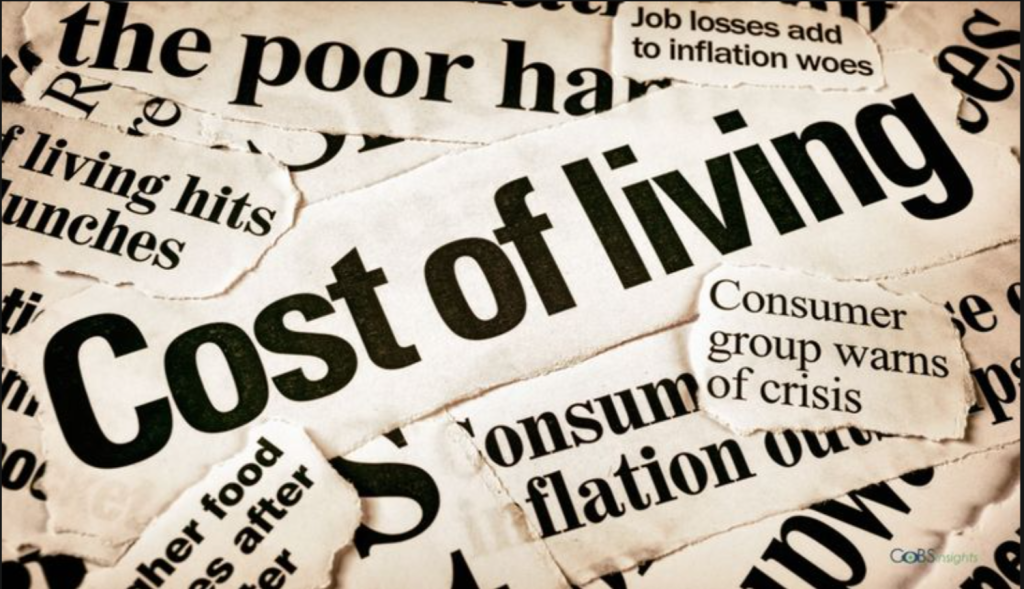
The following article is designed to challenge assumptions, explain the drivers of Kenya’s cost-of-living crisis, and encourage citizens to think critically about economic choices and public accountability. Recent data show inflation in Kenya rising sharply in 2026, largely driven by food, transport, and fuel costs. Inflation reached 6.7% in May 2026, while transport and food prices have been among the strongest contributors to household pressure. (capitalfm.co.ke)
The Cost of Living Crisis in Kenya: Why Many Families Are Working Harder Yet Living Worse
For millions of Kenyans, the cost-of-living crisis is no longer an economic term discussed by analysts and politicians. It is the daily reality of skipped meals, postponed medical visits, mounting debts, delayed rent payments, and shrinking household budgets. Despite reports of economic growth and improved macroeconomic indicators, many citizens feel poorer today than they did a few years ago.
The question many Kenyans continue to ask is simple: Why does life seem to become more expensive every year while incomes remain almost unchanged?
The answer lies in a combination of inflation, taxation, fuel prices, unemployment, currency pressures, structural weaknesses in production, and policy choices.
Understanding the Cost-of-Living Crisis
The cost of living refers to the amount of money required to maintain a certain standard of living. It includes food, housing, transport, education, healthcare, electricity, water, clothing, and communication expenses.
A crisis emerges when the prices of these necessities rise faster than people’s incomes. Families begin spending a larger share of their earnings on basic survival, leaving little room for savings, investment, recreation, or emergencies.
Recent inflation figures indicate that Kenya experienced increased inflationary pressure in 2026, driven largely by higher fuel prices, transport costs, and food expenses. Inflation reached 6.7 percent in May 2026, the highest level in more than two years. (Reuters)
Yet inflation figures alone do not tell the full story.
A household earning KSh 50,000 monthly may technically still earn the same amount today as it did two years ago. The problem is that the purchasing power of those fifty thousand shillings has declined significantly.
The money has not changed.
What has changed is what the money can buy.
Fuel Prices: The Invisible Tax on Everything
Fuel is arguably the single most important component influencing Kenya’s cost of living.
Kenya imports most of its petroleum products. Any increase in global crude oil prices, shipping costs, or exchange rate fluctuations directly affects local pump prices.
Fuel is not simply used by motorists.
Fuel powers transportation systems.
It moves vegetables from Meru to Nairobi.
It transports fish from Kisumu.
It delivers medicine to hospitals.
It powers generators used by businesses.
It influences manufacturing costs.
It affects construction.
It affects agriculture.
It affects electricity production.
When diesel prices increase, transport operators increase fares. Farmers spend more moving produce. Supermarkets pay higher logistics expenses. Businesses transfer these additional costs to consumers.
Ultimately, citizens pay more for food, transportation, and everyday goods.
Recent reports indicate that rising fuel prices have significantly contributed to Kenya’s current inflationary pressures, particularly affecting transportation and food prices. (Reuters)
Taxation and Disposable Income
Taxes play a critical role in funding government services.
However, taxation becomes problematic when citizens perceive that the burden exceeds their ability to pay.
Kenyans contribute through income taxes, value-added taxes, fuel levies, import duties, housing deductions, and numerous indirect taxes embedded within consumer prices.
Indirect taxes disproportionately affect low and middle-income earners.
A wealthy individual and a casual laborer pay similar VAT rates when purchasing cooking oil or bread.
The impact, however, differs dramatically.
For a household already allocating seventy percent of income toward necessities, even modest price increases create severe financial strain.
Citizens are increasingly questioning whether taxation levels correspond with improvements in healthcare, infrastructure, education, and public services.
Food Insecurity and Agricultural Challenges
Food remains the largest household expenditure for many Kenyan families.
Several factors influence food prices.
Climate variability continues to disrupt agricultural production.
Irregular rainfall patterns reduce crop yields.
High fertilizer prices increase production costs.
Poor storage facilities contribute to post-harvest losses.
Middlemen often capture substantial portions of agricultural profits.
Transportation expenses further increase market prices.
Ironically, Kenya remains heavily dependent on agriculture, yet many farmers remain poor while consumers face expensive food prices.
This disconnect reveals weaknesses within agricultural supply chains and market systems.
Improving local food production efficiency could substantially reduce household expenditures.
Unemployment and Underemployment
The cost-of-living crisis cannot be examined independently from employment challenges.
Kenya has a youthful population entering the labor market every year.
Formal job creation has not kept pace with population growth.
Many university graduates remain unemployed.
Others work in informal sectors with irregular incomes.
Some possess advanced qualifications but earn wages insufficient to support families.
A rising cost of living becomes devastating when incomes are unstable.
People begin borrowing for basic needs.
Savings decline.
Debt accumulation increases.
Mental stress intensifies.
Young adults postpone marriage.
Families delay home ownership.
Entrepreneurial risks become harder to undertake.
Economic insecurity gradually transforms into social insecurity.
Housing Pressures
Rent consumes a significant share of urban household income.
In Nairobi and other major towns, rental costs continue rising despite stagnant wages.
Landlords face increased expenses associated with maintenance, utilities, security, and financing.
Tenants absorb these costs.
For many workers, rent accounts for between thirty and fifty percent of monthly earnings.
Affordable housing remains a challenge despite policy initiatives aimed at increasing supply.
Housing affordability is no longer a concern only for low-income earners.
Middle-class families increasingly struggle to maintain previous living standards.
Why Economic Growth Does Not Always Improve Lives
Governments often cite gross domestic product growth as evidence of economic progress.
Economic growth matters.
Yet growth alone does not guarantee improved living conditions.
Growth concentrated within a few sectors may generate wealth for investors while ordinary workers experience limited benefits.
The critical question is not simply whether the economy grows.
The question is whether citizens experience meaningful increases in purchasing power.
Economic success should be measured not only through statistics but also through practical indicators.
Can families afford nutritious meals?
Can young professionals save money?
Can businesses expand?
Can citizens access affordable healthcare?
Can workers commute without sacrificing essential expenses?
These are the indicators that citizens understand.
The Role of Citizens
While governments hold substantial responsibility for economic management, citizens also play an important role.
Voting decisions matter.
Demanding transparency matters.
Supporting local production matters.
Financial literacy matters.
Avoiding excessive debt matters.
Encouraging accountability matters.
Citizens who exchange votes for short-term incentives often weaken their ability to demand long-term economic reforms.
Public participation should extend beyond election periods.
Continuous civic engagement helps strengthen institutions and improve policy implementation.
Conclusion
Kenya’s cost-of-living crisis is not the result of a single event or policy. It is the product of interconnected challenges involving fuel dependency, taxation, food insecurity, unemployment, housing pressures, and structural inefficiencies within the economy.
The most painful aspect of the crisis is not merely rising prices. It is the widening gap between effort and reward. Millions of Kenyans wake up early, work diligently, and pursue opportunities, yet many still struggle to meet basic needs.
An economy should not merely expand on paper. It should enable citizens to live with dignity, save for the future, educate their children, and pursue opportunities without constant anxiety about survival. Until economic progress is reflected in the daily experiences of ordinary households, the cost-of-living debate will remain one of the most important conversations facing Kenya.
This article uses recent inflation and fuel-cost data reported in 2026 to provide factual context. (capitalfm.co.ke)
Leave a Reply